Source Wear Resisting Pu Timing Belt for Conveyor, Automation, and Packaging
Find 30 wear resisting pu timing belt options from Guangdong suppliers. Compare AT5, T5, and T10 models with steel or Kevlar reinforcement. Evaluate anti-static, oil-resistant, and heat-resistant features for industrial automation and conveyor applications; compare the available evidence and request quotations based on your requirements.
Key considerations
Products List


Comprehensive Sourcing Guide
Wear Resisting PU Timing Belt Sourcing Guide
Buyers must first distinguish between general PU timing belts and specialized sealing strips, as the supplied data reveals a mix of product attributes including "Waterproof Tape" and "Automotive Sealing Strip" alongside standard timing belt models. This overlap requires careful scrutiny of the product name and intended usage to ensure the selected item matches the specific mechanical transmission needs rather than a sealing or coating application.
Procurement teams should verify that the "PU timing belt" designation aligns with the observed model numbers like AT10, T5, and T20, which indicate specific tooth profiles for power transmission. Relying solely on the broad term "wear resisting" without confirming the structural reinforcement, such as steel or Kevlar cords, can lead to selecting a product designed for static sealing rather than dynamic drive systems.
Product Scope and Observed Listing Signals
The market listings indicate a wide range of customization options, with "Customization: Available" being a prominent feature across multiple entries. Buyers should expect that standard models like T5 and T10 are readily available, but specific lengths or tooth counts may require a custom order, necessitating clear communication regarding the "Endless type" configuration versus cut-to-length requirements.
Observations show that packaging varies significantly between "Bags/Cartons," "Plastic Film," and "Film & Carton," which impacts logistics planning and on-site storage. Procurement officers must specify the required packaging standard during the inquiry phase to prevent damage during transit, especially since the product is described as having high tensile strength and specific hardness ratings that could be compromised by improper handling.
Technical Specifications to Verify
Technical verification must focus on the reinforcement material, as the data explicitly lists "Steel or Kevlar Cord" as the reinforced cord options. Selecting the correct cord type is critical for applications requiring high tensile strength, as the presence of these materials directly influences the belt's ability to withstand the "Strong" tensile forces observed in the product attributes without stretching or failing under load.
Buyers must also confirm the hardness rating, with "90A" appearing as a specific value in the provided facts, while remaining open to other durometer levels depending on the application. The feature set includes "Anti-Static," "Oil-Resistant," and "Heat-Resistant" properties, which should be validated against the specific operating environment to ensure the belt will not degrade when exposed to chemicals, extreme temperatures, or static-generating conditions.
Compliance and Safety Documentation
Documentation review should prioritize the "ISO" and "ISO9001" certifications mentioned in the supply data, as these indicate a baseline commitment to quality management systems. However, buyers must request specific test reports for the "Wear-resistant," "Flame-resistant," and "Cold-resistant" features to confirm that the product meets the safety and performance standards required for their specific industrial environment.
It is essential to verify that the "Standard or Nonstandard" classification aligns with the buyer's machinery requirements, as the data notes that standards can be "According to order." Procurement teams should ensure that any non-standard specifications are clearly documented in the purchase order to avoid receiving a product that does not fit the existing drive system or fails to meet the "A level" quality expectations observed in some listings.
Cost Drivers and Commercial Terms
Pricing is influenced by the complexity of the "Customization" request and the specific model number selected, with observed ranges spanning from 0.42 to 99 USD. Buyers should understand that higher costs may correlate with specialized features like "Kevlar Cord" reinforcement or specific "Endless type" manufacturing processes, rather than just the base material cost of the PU rubber.
Minimum Order Quantities (MOQ) vary between 1 and 200 units, offering flexibility for small trials but potentially increasing unit costs for larger runs. Procurement strategies should account for the "Selling Units: Single item" option for sampling, while planning for bulk orders that might leverage the "Carton" or "Bag" packaging efficiencies to reduce per-unit shipping and handling expenses.
Supplier Qualification and Quality Control
Supplier location data points to "Guangdong, China," "Shenzhen, China," and "Dongguan" as primary manufacturing hubs, which are known for their mature rubber processing industries. Buyers should verify the specific factory location, such as "Sanmen County," to assess the logistical feasibility and to ensure the supplier has the necessary "Cutting" processing services to meet custom length requirements.
Quality control protocols must be established to validate the "100000km" quality claim, which suggests a long service life but requires independent verification. Buyers should request evidence of the "New" condition and "Semi-Automatic" production methods to ensure consistency, while also confirming that the "Hardness: 90A" and other physical attributes are maintained across the entire production batch.
Long-Term Procurement Checks
Long-term success depends on monitoring the "Wear-resistant" and "Tear-resistant" performance over time, as these are critical for maintaining operational efficiency. Buyers should establish a schedule for inspecting the belts for signs of "Oil-Resistant" degradation or "Heat-Resistant" failure, ensuring that the product continues to perform as expected after extended periods of use in demanding environments.
Supply chain stability requires regular audits of the supplier's ability to maintain the "Standard" or "Nonstandard" specifications over multiple production cycles. Procurement teams should maintain open communication regarding the "prod_model" variations, such as "60T-5m-9mm" or "8m-800," to ensure that future orders can be fulfilled with the same precision and quality as the initial purchase.
FAQs
What materials are used in wear resisting pu timing belts?
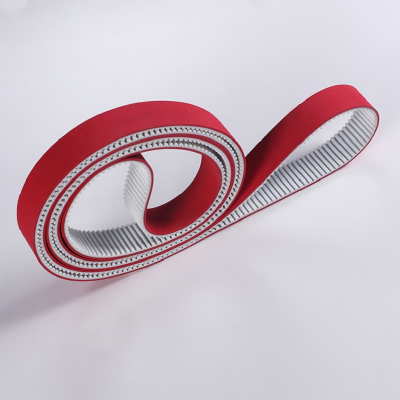
The belts are constructed from durable rubber and PU materials. They feature reinforced cords made of steel or Kevlar for strength. The surface is white and designed to be anti-static, oil-resistant, and heat-resistant. This combination ensures long-term performance in demanding industrial environments.
Which specifications are available for these timing belts?
Available models include AT10, AT5, AT20, T10, T5, and T20. Customization is available to meet specific order requirements. The belts are standard type and can be endless. Specific configurations like 60T-5m-9mm are also supported for precise mechanical applications.
Can I customize the wear resisting pu timing belt?
Yes, customization is available for these products. You can specify models, standards, and packaging according to your order. The belts are produced in Guangdong, China, with origins in Sanmen County and Dongguan. This allows for tailored solutions for various industrial machinery needs.
What certifications do these timing belts have?
The products hold ISO certification and adhere to ISO9001 standards. They are classified as standard or nonstandard based on the order. The quality is rated for 100000km usage. This ensures reliability and compliance with international manufacturing quality benchmarks for industrial components.
How are the belts packaged and shipped?
Packaging includes bags, cartons, plastic film, and film with carton. The single package size is listed as XX cm. The selling unit is a single item. This flexible packaging ensures safe transport and protection of the belts during shipping from China to global destinations.
What features make these belts wear resistant?
The belts are designed to be wear-resistant, heat-resistant, and tear-resistant. They also offer cold-resistant and flame-resistant properties. The tensile strength is strong, and the hardness is 90A. These features ensure durability and performance in high-friction industrial applications.